FullStackOpen前端笔记

This is a free course from University of Helsinki.

课程网站:全栈公开课

提交作业:Course stats
(commit到自己的repo即可)

Github repo:fullstack-hy2020/fullstack-hy2020.github.io

该课程的 Part0 - Part2 会介绍基本的 前端 开发知识。

Part 0

helloworld 打印到控制台。(即浏览器 F12 页面中的 Console)

1
console.log("helloworld")

DOM

Document Object Model ,Web 上最常用的 API 之一。

文档对象模型 | MDN

Event Handlers & Callback Function

Manipulating the document-object from console

HTML 显示的内容、CSS 样式 可以通过在控制台执行 JavaScript 指令来更改。但通常在本地控制台的更改不会上传到云端,所以刷新页面之后更改不会生效。

Part 1

配好环境!

首先,调整好 Linux 开发环境。下面是我在使用 WSL 时遇到的问题:

1. 目录路径混用 Windows 和 Linux 风格

我想让 WSL 成为一个独立的开发环境,而不受 Windows 配置的各种环境的影响。

检查npm的安装路径:

1
which npm

如果不是安装在 Linux 的 \root 等目录下,说明使用了 Windows 的环境。

更改:

1
2
3
4
5
6
7
8
9
10
11
# 安装 nvm (Node Version Manager)
curl -o- https://raw.githubusercontent.com/nvm-sh/nvm/v0.40.1/install.sh | bash

# 重新加载配置
source ~/.bashrc

# 安装最新的长期支持版 Node.js
nvm install --lts

# 验证路径(此时应指向 /root/.nvm/...)
which npm

之后,在 part1 目录下,使用 WSL 内部的 npm 重新安装

1
npm install

启动开发服务器

1
npm run dev

2. 在 WSL 的目录中快速进入 Windows 的 VSCode

1
2
# 使用 VSCode 打开当前目录
code-insiders .

我的电脑上安装的是 Insider 版本,储存在环境变量的文件名为 code-insiders。如果是 User 版本的 VSCode,直接输入 code 即可。

此外,建议打开 VSCode 的 wsl 窗口模式,以使用 WSL 的环境。

在 WSL 中重新打开文件夹(VSCode的命令):

1
remote-wsl.reopenFromRecommendation

a. React 简介

使用一款叫做 vite 的工具,可以快速创建web应用。

vitejs/vite: Next generation frontend tooling. It’s fast!

创建新的 React 应用:

1
npm create vite@latest

启动服务器

1
npm run dev

React 组件 (Component)

你的第一个组件 – React 中文文档

component 就是一个js函数,只不过函数名必须大写。比如:```

1
2
3
4
5
6
7
8
9
const Hello = (props) => {
  console.log(props)
  return (
    <div>
      <p>Hello, {props.name}! This greeting is from user-defined functions.</p>
      <br />
    </div>
  )
}

而这样的定义是 非法的

1
2
3
const footer = () => {
...
}

App 组件中,footer 并不会作为组件被加载,而是一个普通的 HTML 元素。

箭头函数表达式

箭头函数表达式 - JavaScript | MDN

一个函数:

1
2
3
function double(x) {
return 2 * x;
};

可以写成:

1
2
3
const double = (x) => {
return 2 * x;
}

更紧凑的写法:

1
x => 2 * x

JSX

使用 JSX 书写标签语言 – React 中文文档

js的一种语法扩展。文件扩展名为 .jsx。可以让你更方便地编写动态内容,就像直接在js中嵌入html。

props : Passing Data to Components

可以将properties传递给component

一个react组件只会接收一个参数,即一个props对象。

<React.Fragment /> 元素

React组件只允许返回单个元素。如果要返回多个,可以使用 React.Fragment 将他们包裹起来。也可简写成 <>...</>

1
2
3
4
5
6
7
8
9
10
11
12
13
14
15
16
17
function Content(props) {
  return (
    <> // React.Fragment
      <p>
        "{props.arr[0].name}" has {props.arr[0].exercises} exercises.
      </p>
      <p>
        "{props.arr[1].name}" has {props.arr[1].exercises} exercises.
      </p>
      <p>
        "{props.arr[2].name}" has {props.arr[2].exercises} exercises.
      </p>
    </>

  );

}

b. JavaScript

对象

对象字面量 - JavaScript | MDN

c. Component State & Event Handlers

Destructing

解构 - JavaScript | MDN是 JS 的一种语法特性。

一个对象的属性可以这么表示:

1
2
3
4
props = {
name: 'Arto Hellas',
age: 35,
}

需要在组件中调用该对象的属性时,可以这么写:

1
2
3
4
5
6
7
function showInfo(props) {
return (
<div>
姓名:{props.name} 年龄:{props.age}
<div/>
);
}

每次都要写 props 很麻烦。可以解构该对象的属性:

1
2
3
4
5
6
7
const showInfo = ({name, age}) => {
return (
<div>
姓名:{name} 年龄:{age}
<div/>
);
}

这样,我们可以直接将各个属性赋值给函数中的局部变量。

留一个问题:这样写,可以提升性能吗?直接传入props是不是相当于将原对象复制了一份再传入函数中;而使用解构就避免了直接复制对象?能不能省内存?搞清他的底层原理。

State & Hook

在 React 中,组件存储的信息被称为 State。State: A Component’s Memory – React
useState 是一种 React Hook。useState – React

1
const [index, setIndex] = useState(0);
  • index - state variable.
  • setIndex - setter function

只要一个组件内的某个 state 发生变化, React 就会重新渲染一次页面。

注意:不要在非 React 组件内使用 Hook;也不要在循环体和条件判断语句内使用 Hook。

1
2
3
4
5
6
7
8
9
10
11
12
13
14
15
16
17
18
19
20
21
22
23
24
const App = () => {
// these are ok
const [age, setAge] = useState(0)
const [name, setName] = useState('Juha Tauriainen')

if ( age > 10 ) {
// this does not work!
const [foobar, setFoobar] = useState(null)
}

for ( let i = 0; i < age; i++ ) {
// also this is not good
const [rightWay, setRightWay] = useState(false)
}

const notGood = () => {
// and this is also illegal
const [x, setX] = useState(-1000)
}

return (
//...
)
}

An Event Handler is a Function

当我们定义一个按钮:

1
2
3
<button onClick={() => setCounter(counter + 1)}>
plus
</button>

我就在想,onClick= 后面接的为什么不能是一个表达式呢?就像这样:

1
2
3
<button onClick={setCounter(counter + 1)}>
plus
</button>

这么写 console 会报错:

d. A more complex State

Spread Syntax (…) - 展开语法

Spread syntax (…) - JavaScript | MDN

JS ES6 引入的功能。

当我们定义对象的一个状态 clicks:

1
2
3
4
const [clicks, setClicks] = useState({
left: 0,
right: 0
}

For the immutability of a state from a component in React, we can set it a new state like this:

1
2
3
4
5
6
7
const handleLeftClick = () => {
const newClicks = {
left: props.left + 1,
right: props.right
};
setClicks(newClicks);
};

But what if I want to add some extra properties to the state clicks? Maybe we can add a property called middle:

1
2
3
4
5
const [clicks, setClicks] = useState({
left: 0,
right: 0,
middle: 0
});

这样下面的各个函数也要随之修改。为了提高代码的可维护性,可以使用 JS 的展开语法。对于 handleLeftClick() 组件,可以这么写:

1
2
3
4
5
6
7
const handleLeftClick = () => {
const newClicks = {
...clicks,
right: props.left + 1
};
setClicks(newClicks);
};

这相当于把原来的 clicks 原封不动地复制过来,再进行 props.left + 1 的操作。

请注意:在 React 中,禁止直接改变组件的状态props.left++; 这样的表达式是非法的

同时,如果需要向状态数组中插入元素,请使用 concat() 方法,而不是直接 push() 到原数组中。concat() 的底层是将数组浅拷贝,并返回一个新数组,适用于react组件中的status。

Update of the State is asynchronous

理解不能。

在 React 中,状态的更新是异步进行的。参见官方文档:把一系列 state 更新加入队列 – React 中文文档

  • 设置 state 不会更改现有渲染中的变量,但会请求一次新的渲染。
  • React 会在事件处理函数执行完成之后处理 state 更新。这被称为批处理。
  • 要在一个事件中多次更新某些 state,你可以使用 setNumber(n => n + 1) 更新函数。

官方文档解释得已经很详尽,不再赘述。

processQueue.js

1
2
3
4
5
6
7
8
9
10
11
12
13
14
15
export function getFinalState(baseState, queue) {
let finalState = baseState;

for (let update of queue) {
if (typeof update === 'function') {
// 调用更新函数
finalState = update(finalState);
} else {
// 替换下一个 state
finalState = update;
}
}

return finalState;
}

Part 2

前端开发需要反复用到 console.log() .此时 Snippets 就很方便:
Snippets in Visual Studio Code

a. Rendering Collections and Modules

Key-attribute

所有用 map 方法生成的元素,都必须有一个 unique 的 key。

Array.prototype.map() 方法根据一定的规则(函数),对 Array 数组进行映射 (Mapping)。

1
2
3
const array1 = [1, 2, 4, 8];
const map1 = array.map((x) => x * 2);
console.log(map1);

输出结果为:

1
> Array [2, 4, 8, 16]

这里,(x) => x*2 就是 map() 方法所使用的的规则。

不建议 使用数组索引作为键。
Index as a key is an anti-pattern | Robin Pokorny

Array.prototype.reduce()

Array.prototype.reduce() - JavaScript | MDN
callbackFn 逐个作用于数组的每一个元素上,且上一次的输出会作为下一次的输入。

语法:

1
2
reduce(callbackFn)
reduce(callbackFn, initialValue)
  • callbackFn :为数组中每个元素执行的函数。
    该函数被调用时涉及的参数(注意参数要按顺序写):
    • accumulator - 上一次调用 callbackFn 的结果
    • currentValue - 当前元素的值
    • currentIndex
    • array
  • initialValue

下面是 reduce() 的一些常见用法:

求和(用了箭头函数的简化形式,总和初始值为 0)

1
2
3
let array = [1, 2, 3, 4];
let sum = array.reduce((total, current) => total + current, 0);
console.log(sum);

b. Forms

讲义上例子的最终效果:

该节习题的最终效果:

Array.prototype.filter()

Array.prototype.filter() - JavaScript | MDN

filter() 方法创建一份 array浅拷贝,根据filter过滤后,返回一个新的数组。

c. Getting Data from Server

typicode/json-server: Get a full fake REST API with zero coding in less than 30 seconds (seriously)
我们暂时还没有后端,但又要模拟与后端的交互,可以用 json-server :

使用npm安装:

1
npm install json-server

开启服务器:

1
npx json-server --port 3001 db.json

Event Loop

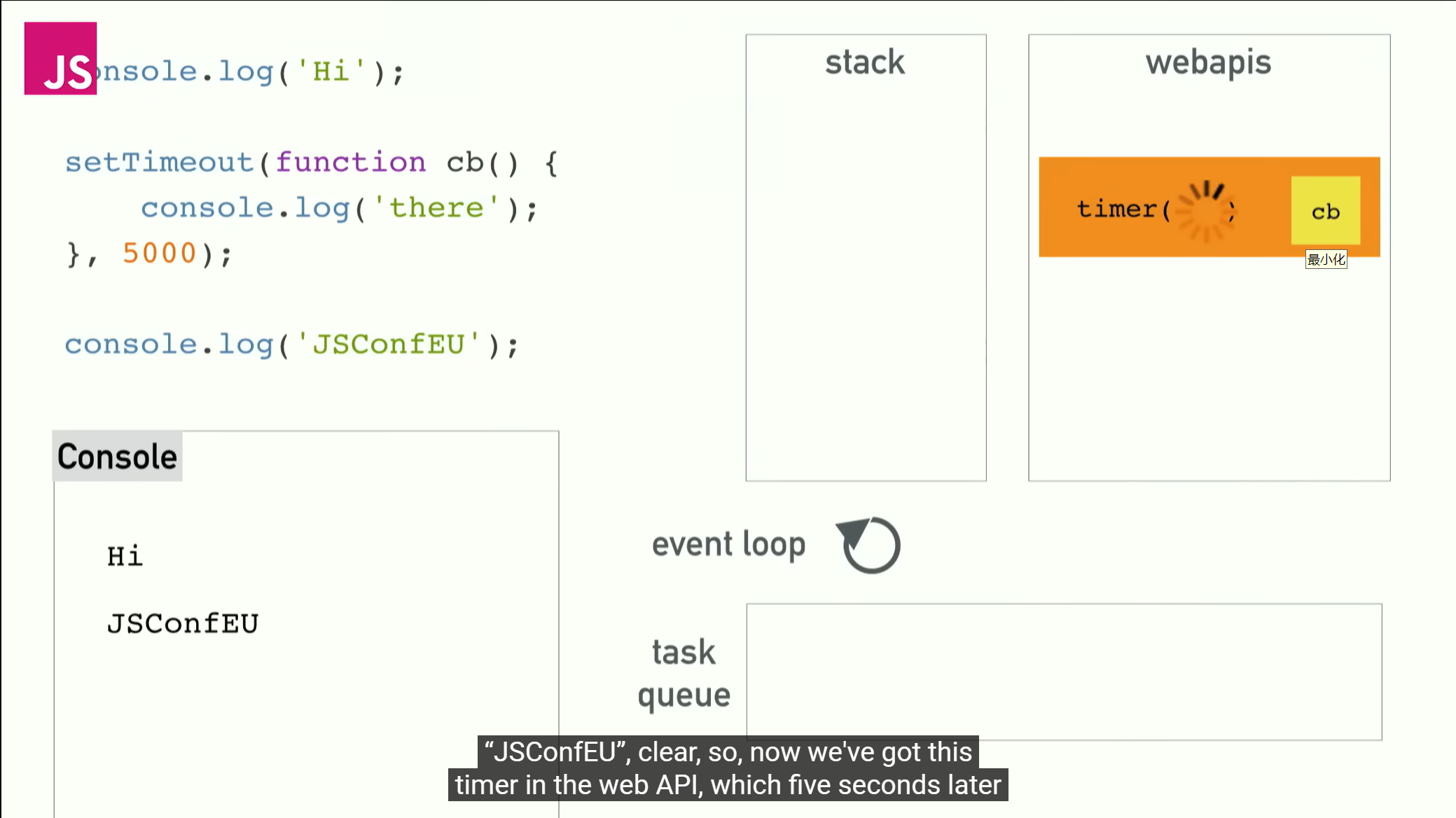
事件循环是 JS 处理异步行为的核心机制。

What the heck is the event loop anyway? | Philip Roberts | JSConf EU
Philip Roberts 讲得太好了。看完之后,大概了解了 栈、Web API和 Callback Queue 的关系,更能理解js的“单线程非阻塞”特性。
Node Package Manager

如今大部分js项目都是用npm配置的。一般,使用npm构建的项目的根目录有一个 package.json 文件。

axios是一个基于 Promise 的 HTTP 客户端,用于发送网络请求。在项目根目录下运行:

1
npm install axios

将 json-server 安装为开发依赖项("devDependencies")(应用程序本身不需要用到 json-server,所以不用安装为 dependencies):

1
npm install json-server --save-dev

编辑 package.json ,在 scripts 属性中添加:

1
2
3
4
5
"scripts" : {
"dev": "vite",
"server": "json-server -p 3001 db.json",
...
}

这样就可以在本地的 3001 端口启动 json-server:

1
npm run server

Promise

A promise is an object that represents an asynchronous operation.

Promise 的状态包括:Pending Fulfilled Rejected

使用 Promise - JavaScript | MDN
基本用例 | Axios中文文档 | Axios中文网

axios 的 get 方法返回一个 Promise

1
const pormise2 = axios.get("http://blog.huarun.moe/posts")

如果用 POST 方法,还可以指定请求体(支持 XML JSON 等多种格式):

1
2
const noteObject = {id: '1', content: 'Dont put the shitty code on stack.'};
const promise3 = axios.post('http://localhost:3001/notes', noteObject);

可以将 Promise(“期约”) 理解为 “现在不返回,但将来的某一时刻会返回回调函数的执行结果” 的类,确实挺像“承诺”的。但是,和基于事件循环(Event Loop)的事件不一样,Promise 只能触发一次

如果要获取 Promise 中的数据,要求 Promise 的状态为已兑现(Fulfilled)。为了更改 Promise 的状态,需要为 Promise 注册一个 Event Handler。可以使用 then()等方法,实现 扁平化链式调用

1
2
3
4
5
6
7
8
9
10
11
12
13
14
15
16
17
18
19
20
21
22
23
24
25
26
27
28
29
30
31
import axios from 'axios';

// 这是一个典型的 Promise 链式调用
axios.get('/api/user?name=Gemini')
.then(response => {
// 第一个异步操作成功
console.log('用户信息:', response.data);
const userId = response.data.id;
// 返回一个新的 Promise,实现链式传递
return axios.get(`/api/posts?userId=${userId}`);
})
.then(response => {
// 这里的 response 是第二个请求(获取文章)的结果
console.log('文章列表:', response.data);
const firstPostId = response.data[0].id;
// 继续返回一个新的 Promise
return axios.get(`/api/comments?postId=${firstPostId}`);
})
.then(response => {
// 这里的 response 是第三个请求(获取评论)的结果
console.log('第一篇文章的评论:', response.data);
})
.catch(error => {
// 只要链条中任何一个环节出错,都会直接跳到这里
// 这种机制叫做“错误冒泡 (Error Bubbling)”
console.error('请求过程中发生错误:', error);
})
.finally(() => {
// 无论前面的promise返回结果如何,finally()中的语句都会被执行
console.log('整个流程处理完毕');
});

(generated by AI)

Effect Hook

Effect Hooks – React 中文文档
使用 Effect 进行同步 – React 中文文档

可以用 Effect Hook 从服务端获取数据,参数分别是副作用(作为回调函数)和依赖数组

1
useEffect(sideEffects, dependencyArray);

When dependencyArray is an empty array ([]) , the call back function will be executed only once after the component finished its rendering.

Dependency sideEffects 备注
( 无 ) 初始 + 组件更新
[]( 空数组 ) 初始
[dependency1, denpendency2...] 初始 + 依赖项更新 任何一个 Dependency 发生变化, useEffect() 就会调用回调函数

d. Altering Data in Server

REST API

REpresentational State Transfer

2个核心:资源表示性 + 状态传输
6个约束:客户端服务端、统一接口、无状态、缓存、分层系统、按需代码

将后端通信分离为单独的模块

首先,将后端通信的功能分离在 src/services/note.js 中。可以这么写:

1
2
3
4
5
6
7
8
9
10
11
12
13
14
15
16
17
18
19
20
21
22
import axios from 'axios';
const baseUrl = 'http://localhost:3001/notes';

const getAllNotes = () => {
    return axios.get(baseUrl);
};

const createNewNote = (newObject) => {
    return axios.post(baseUrl, newObject);
};

const updateNotes = (id, newObject) => {
    // 使用 PUT 方法,直接替换整条笔记
    // 基于笔记id的每条笔记资源的唯一url
    return axios.put(`${baseUrl}/${id}`, newObject);
};

export default {
    getAll: getAllNotes,
    create: createNewNote,
    update: updateNotes
};

获取note列表(noteService.getAll())、新建note(noteService.create())、更改note状态(noteService.update())这这三个功能可以写成:

1
2
3
4
5
6
7
8
9
10
11
12
13
14
15
16
17
18
19
20
21
22
23
24
25
26
27
28
29
30
31
32
33
34
35
36
37
38
39
40
import noteService from './services/notes';

// ...

const App = () => {
useEffect(() => {
noteService
.getAll()
.then(response => {
console.log('promise fulfilled');
setNotes(response.data);
})
}, []);
// ...
};

// ...

noteService
.create(noteObject)
.then(response => {
console.log(response);
// 用浅拷贝的concat方法,将resonse.data的内容放在本地的note,再渲染
// 注意,不要直接将本地的noteObject添加到note中,而是使用response.data
// 指不准服务端会出什么错呢,导致新note被渲染到页面上,但json-server实际上没接收到新的note
setNotes(notes.concat(response.data));
setNewNote(''); // 重置输入框
});

// ...

noteService
.update(id, changedNote)
// 该 PUT 请求的回调函数将notes状态设定为一个新数组
// 即:遍历note数组,找到指定id,将importance设定为response.data;不是指定id则保持原样
.then(response => {
setNotes(notes.map(note => note.id === id ? response.data : note));
});
}

如此设计,相当于将拆解 HTTP 报文的工作交给了 调用端(App.jsx) 中的代码。但其实将 response 分解成 response.data 的步骤,在 Service 层 完成会更好:

1
2
3
4
const getAllNotes = () => {
    const request = axios.get(baseUrl);
    return request.then(response => response.data);
};

而在调用端(App.jsx)只用这么写:

1
2
3
4
5
6
7
useEffect(() => {
noteService
.getAll()
.then(initialNotes => {
setNotes(initialNotes);
})
}, []);

因为已经在 Service层 返回了 repsonse.data ,所以不需要再调用 响应对象.data() 方法了。

此外,axios中的响应对象还包含了http报文中的其他信息:

Promise.catch()

如果我们用 axios.get() 访问一个不存在的 URL,如何抓取错误呢?

可以用 Promise 的 catch() 方法,该方法会处理 Promise 的 Rejected 状态。

1
2
3
4
5
6
7
8
9
axios
.get('http://...')
.then(response => response.data)
.then(data => {
// ...
})
.catch(error => {
console.log('fail')
})

处理一个典型的错误:

e. Adding Styles to React App

src 目录下创建 index.css

1
2
3
h1 {
color: green;
}

并在 App.jsx 中导入:

1
import './index.css'

这样就应用了一个最基本的样式。

CSS selectors - CSS | MDN - 使用 CSS Selectors 可以规定某个样式应用的范围。

Inline Styles

React 中的内联样式:

1
2
3
4
{
color: 'green',
fontStyle: 'italic' // 驼峰式命名法
}

作业的最终效果


FullStackOpen前端笔记
https://blog.huarun.moe/2026/02/20/FullStackOpen前端笔记/
作者
huarun
发布于
2026年2月20日
许可协议